A breast lift, or mastopexy, is a surgical procedure to elevate and reshape sagging breasts. It involves removing excess skin and reshaping the tissue to achieve a firmer, more youthful appearance. Here, we’ll explain how a breast lift works, highlighting each step of the procedure.
Key Takeaways
- Breast lift surgery, or mastopexy, restores firmer breast profiles by removing excess skin and repositioning breast tissue, targeting sagging due to aging, pregnancy, and weight changes.
- Various anesthesia options are available for breast lift procedures, with general anesthesia being the most common choice, ensuring patient comfort and a pain-free experience during surgery.
- Candidates for breast lift surgery should be in good health, non-smokers, and have realistic expectations for improving breast shape, while potential risks include changes in nipple sensation and or breastfeeding ability.

Are You Ready to Meet Dr. Patel to Discuss Your Treatment Goals?
Understanding Breast Lift Surgery
Breast lift surgery, or mastopexy, restores firmer, more youthful breast profiles. Aging, gravity, pregnancy, and weight changes can lead to the loss of firmness and shape. The breast lift procedure removes excess skin, firming the breasts and repositioning them to a more youthful location without implants. Breast lifts can also be considered for those seeking to enhance their breast profile through breast surgery.
Ideal candidates are women looking to improve their figure by addressing sagging breasts and achieving a more pleasing contour. This surgery effectively helps those dissatisfied with their breast shape and position by reducing the sagging appearance.
Anesthesia Options for Breast Lift
Several anesthesia techniques ensure patient comfort and safety during breast lift surgery. General anesthesia, the most common choice, keeps patients completely unconscious, eliminating any breast sensation or discomfort and providing a controlled, pain-free environment.
Other options include intravenous sedation, which varies from keeping patients conscious to partially asleep, and local anesthesia, numbing only the surgical site. Anesthesia choices are tailored to the patient’s needs and surgery specifics, offering flexible comfort management.
Incision Techniques in Breast Lift Procedures
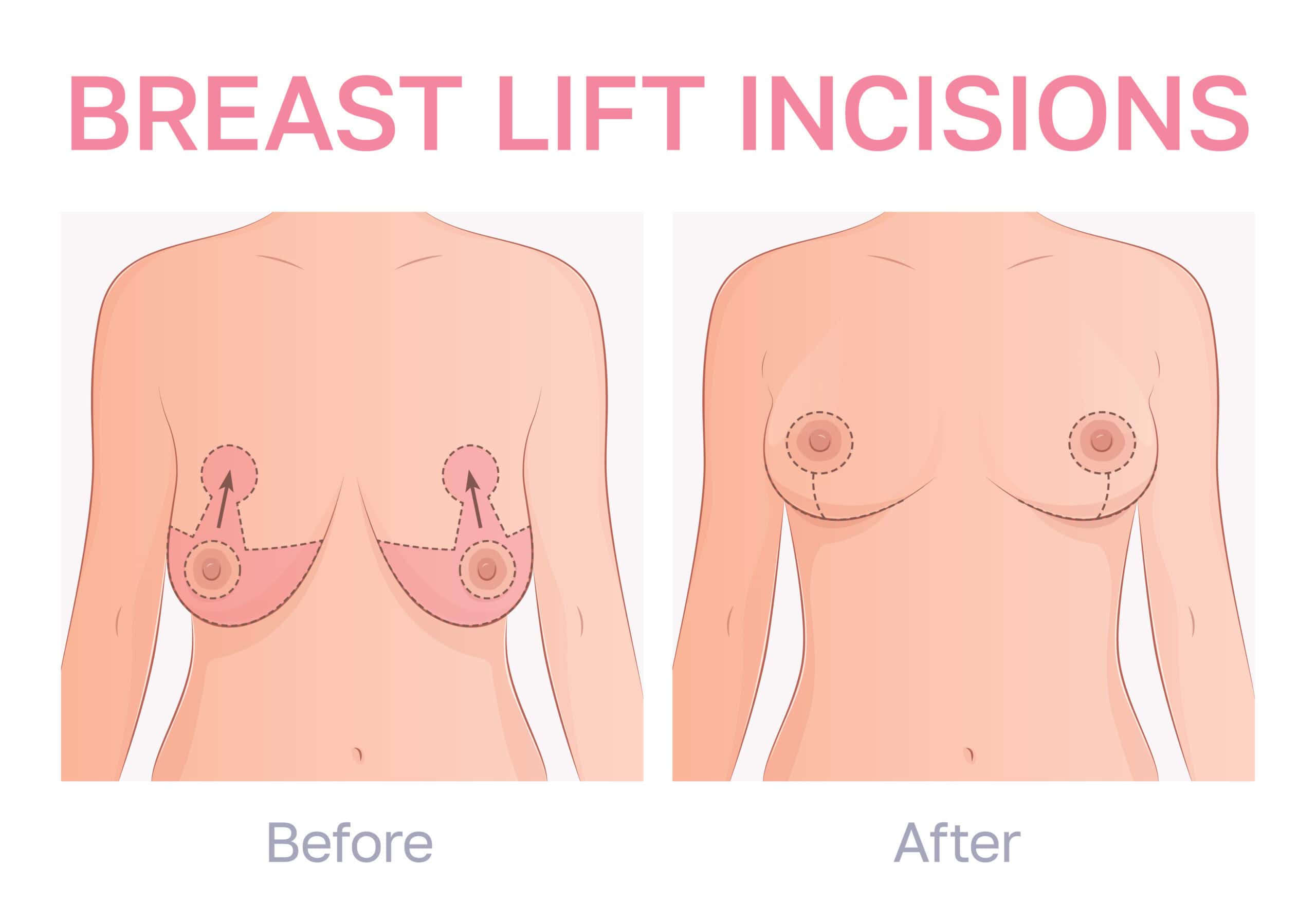
Incision techniques in breast lift procedures depend on the degree of lift needed. A common pattern involves a cut around the areola, allowing the surgeon to remove excess skin and reshape the breast tissue effectively when the degree of sagging is mild.
Additional incisions, such as a vertical cut below the nipple or a horizontal one along the breast crease, may be necessary to achieve the desired result. These provide access to reshape and lift the breast tissue to an even greater degree, ensuring a more youthful, firm appearance.
Specific techniques like crescent and anchor incision are tailored to the needed lift. Each has advantages and is chosen based on breast anatomy and sagging extent. Skilled surgeons, like Dr. Anita Patel, aim to make incisions discreet to minimize visible scarring.
Reshaping and Lifting the Breasts
Reshaping and lifting the breasts is a meticulous process involving several steps. The surgeon removes excess skin and reshapes the underlying tissue to elevate the breasts and nipples, crucial for achieving a firmer, more youthful contour.
The nipple and areola are moved to a higher, more youthful position, often with a reduced areola size to maintain proportionality with the newly shaped breasts, enhancing their aesthetic appeal.
Pregnancy, aging, weight changes, and gravity significantly contribute to the loss of breast firmness and elasticity. A breast lift addresses these issues, restoring a more youthful, lifted appearance and countering the effects of time and physical changes.
Closing Incisions and Minimizing Scars
Closing incisions meticulously and minimizing scars are crucial for a smooth recovery and optimal aesthetic results. Internal stitches reshape the breast tissue and tighten the remaining skin, supporting the new breast shape. Absorbable mesh or dermal matrix is available should one need additional support.
To reduce scar visibility, surgeons use specific dressings over the incisions, and silicone gel sheets, to name two options. Surgical tape keeps incisions protected and reduces skin tension, while silicone gel sheets hydrate the skin and minimize excessive collagen production, preventing prominent scarring. Additionally, skin adhesives can be utilized to further support wound closure. There are ever-evolving dressings that can be applied at the end of surgery to help support creating discreet scars, so your surgeon will guide you to the most current and effective strategy.
Scarring is inevitable, but with proper care, scars can fade significantly over time. Typically, scars from a breast lift improve and become less visible within a year post-surgery, and are in locations often concealed by clothing.
Immediate and Long-Term Results of a Breast Lift
Breast lift results and recovery timeline:
- Results are immediately noticeable, though initial swelling may obscure the final appearance.
- Patients usually return home the same day, with immediate lift and reshaping evident.
- Swelling is typically greatest during the first two to three weeks.
- Swelling gradually subsides to reveal the enhanced contour during breast lift recovery.
Long-term results continue to improve over time. Post-surgery care includes:
- Physical activity should be limited for up to six weeks to ensure proper healing.
- Moisturizing scars can prevent darkening and improve appearance.
- Applying sunscreen to healed scars also helps prevent darkening and improves appearance.
Full improvement from a breast lift can take up to a year, with about 75% of the final appearance observable three to four months post-procedure. This gradual process allows the breasts to settle into their new shape, enhancing self-image and confidence.
Recovery Process After Breast Lift Surgery
The recovery process is crucial for optimal results. Patients should arrange transportation and post-operative assistance due to initial recovery discomfort. Wearing a special bra manages swelling and supports healing, ensuring the newly shaped breasts maintain their form and take pressure off of newly healing incisions.
By the end of two weeks, most swelling should significantly decrease, revealing more surgery results. Avoiding heavy lifting and strenuous activities for at least several weeks post-surgery prevents complications and ensures proper healing.
Physical and aesthetic changes continue to evolve for up to six months post-procedure. Maintaining a stable weight and healthy lifestyle supports long-term results and preserves the final results of the breast lift, aiding in weight loss and managing weight fluctuations.
Benefits and Risks of Breast Lift Surgery
Breast lift surgery offers numerous benefits, including elevating the breasts and improving contour, significantly enhancing self-confidence and body image. This makes it a popular choice for many women addressing sagging breasts. A breast lift raises the breasts to a more youthful position, and breast augmentation can also be considered for those seeking additional enhancement.
However, like any surgery, it carries potential risks and possible complications. Potential side effects include:
- Lasting changes in nipple sensation
- Asymmetry
- Risks such as bleeding or infection
- Adverse reactions to anesthesia.
Despite these risks, the benefits of a firmer, more youthful breast profile often outweigh potential complications. Proper scar management and wearing a surgical bra are essential for optimizing surgical outcomes.
Ideal Candidates for a Breast Lift
Ideal candidates:
- Are in good health and maintain a stable weight
- Are non-smokers, as smoking adversely affects healing and surgery outcomes
- Are dissatisfied with their breast shape, such as sagging or elongated appearance, and may benefit from this cosmetic surgery breast reduction procedure
Candidates often have concerns about downward-pointing nipples or those falling below the breast crease. Individuals with stretched breast skin and enlarged areolas may also be suitable. The goal is to set realistic expectations for a more youthful, aesthetically pleasing breast contour.
Preparing for Your Breast Lift
Preparing for a breast lift involves several steps to ensure the best outcome. Providing a complete medical history, including any past breast biopsies or abnormal imaging, is crucial for effective procedure planning. Patients may also need lab tests or a medical evaluation.
Recommendations include:
- A baseline mammogram is recommended if 40 years of age or older, or even younger if having a family history of breast cancer
- Avoid aspirin, anti-inflammatory medications, and certain herbal supplements to reduce bleeding risk.
- Quit smoking at least six weeks before surgery to enhance healing.
Choosing a Qualified Plastic Surgeon
Selecting a qualified plastic surgeon is crucial for the best results in plastic surgery. Ensuring board certification by the American Board of Plastic Surgery provides confidence in their training and capability. Experience specifically in breast lift procedures is essential for optimal aesthetic outcomes.
Consultations allow evaluation of a surgeon’s approach and questioning of their qualifications. Surgeons should be transparent about their experience and provide before-and-after galleries to demonstrate their work, including details about past surgeries.
Summary
Breast lift surgery is a transformative procedure that can significantly enhance the appearance and confidence of women experiencing sagging breasts. By understanding the steps involved, from anesthesia options to incision techniques and recovery, patients can make informed decisions about their surgery.
The key to a successful breast lift lies in proper preparation, choosing a qualified plastic surgeon, and adhering to post-operative care instructions. With the right approach, breast lift surgery can offer lasting benefits and a renewed sense of self-confidence.
Frequently Asked Questions
What is a breast lift surgery?
Breast lift surgery, or mastopexy, is a procedure designed to restore firmer and more youthful breast profiles by removing excess skin and repositioning the breasts. This surgery does not involve the use of implants, but they can be added if more fullness is desired.
What anesthesia options are available for breast lift surgery?
The primary anesthesia option for breast lift surgery is general anesthesia, which ensures complete comfort. Alternatively, intravenous sedation and regional anesthesia may be utilized based on patient needs and surgeon preference.
How are incisions made in breast lift procedures?
Incisions in full breast lift procedures are typically made around the areola and extend vertically downward toward the breast crease, with additional horizontal incisions along the breast creases if necessary. This approach allows for effective and complete lifting and reshaping of the breast.
What are the benefits of breast lift surgery?
Breast lift surgery offers the benefits of restoring a youthful breast position, enhancing contour, and boosting self-confidence. It is essential to consider potential risks, including changes in nipple sensation and scarring.
How long is the recovery process after a breast lift?
The recovery process after a breast lift generally includes a decrease in discomfort within the first week, with a recommendation to avoid heavy lifting and strenuous activities for at least six weeks. Complete healing and full aesthetic improvement may take up to a year.